
Find People Through Walnut Records
Start with the fact already known. A full name fits public staff and professional-license directories. A Walnut street address fits the county assessor and map tools. An older address may need a reverse directory, deed chain, obituary, or probate case. Court searches work best when a name can be paired with a likely case type and rough filing period.
The order matters because no single Walnut database covers every person. City files are request based. County property records are split between a web parcel search and an office-only deed index. Court name access is online but carries a search fee. A careful search moves from the broad, low-cost source to the custodian most likely to hold the source record.
- Write down known variants. Include a full name, former name, business name, address, and an estimated year.
- Choose the right keeper. Walnut City Hall holds municipal files, while Los Angeles County holds deeds, assessor records, court cases, voter files, and county vital records.
- Use the least restricted index first. Try a public staff page, license lookup, court index, or address-based parcel tool.
- Confirm the match. Compare dates, filing places, roles, and addresses instead of trusting a name alone.
- Use the offline fallback. Visit, mail, call, or file a records request when the official index does not reach the open web.
Walnut Records Keepers by Level
Walnut is not the Los Angeles County seat. That distinction explains the city’s records map. The City Clerk keeps council minutes, resolutions, ordinances, municipal election material, claims, and local requests. The Los Angeles County Registrar-Recorder/County Clerk, often shortened to RR/CC, keeps recorded real-estate documents and county birth, death, and marriage records. LA Superior Court holds court files, while the county Assessor connects an address to its parcel identity.
Local law enforcement follows the same county-first pattern. Walnut has no separate city police department; the LASD Walnut/Diamond Bar Station serves the city. Detailed access rules and copy procedures belong with the Walnut public records system, but these offices show where a people search should go first.
LA County RR/CC
12400 Imperial Highway
Norwalk, CA 90650
Recorder, clerk, vital, and election records
Office level is the first filter. It prevents a local request from being sent to a city department that never held the county record.
Walnut Deed Search Stays Offline
Los Angeles County maintains real-estate records from 1851, yet its official name index is not available on the internet. The RR/CC keeps alphabetical indexes by party name and year at its Norwalk headquarters. Records from 1851 through 1957 are reviewed on the lower level. Records from 1958 forward are reviewed on the second floor. Telephone index searches are not accepted, and appointments may be scheduled up to two weeks ahead. The RR/CC real-estate viewing notice makes that unusual access rule plain.
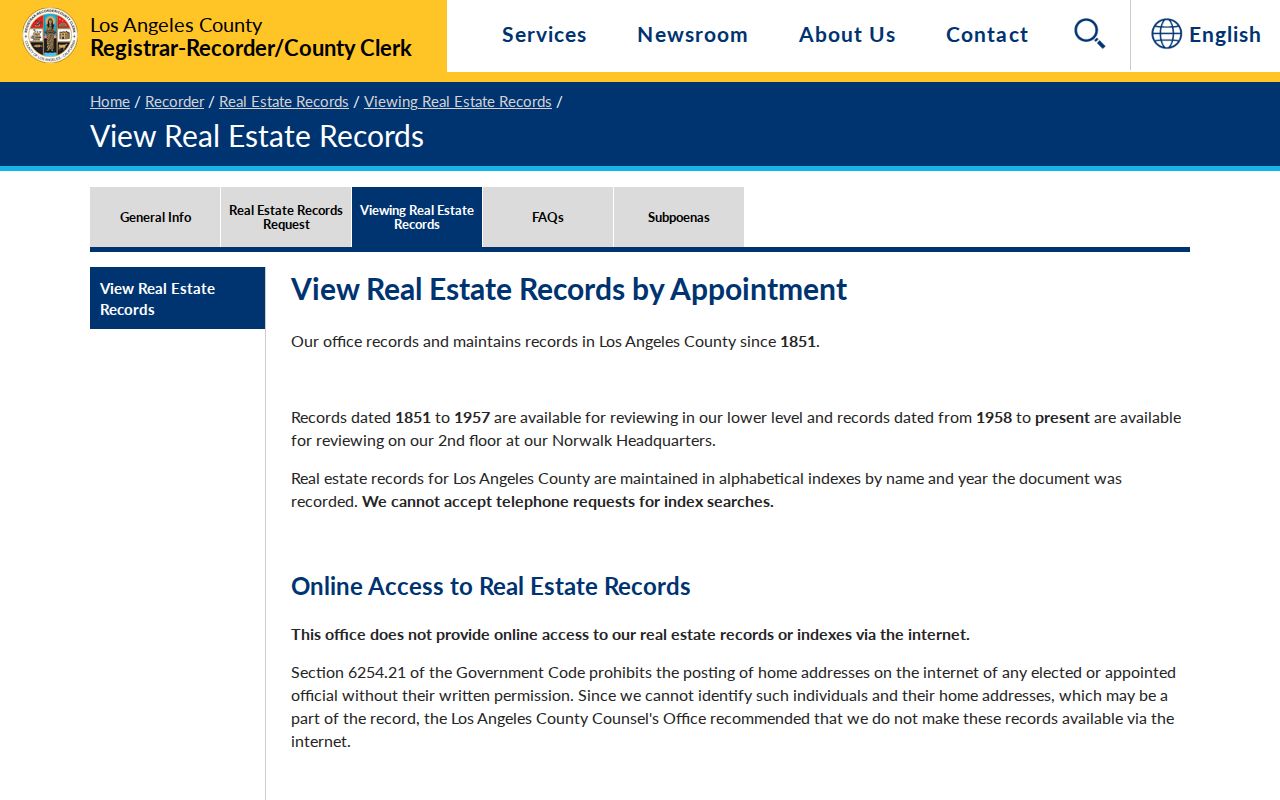
The screenshot is a useful guardrail: an official Walnut deed search requires office index work, even after the assessor helps identify a parcel.
| Official path | Where it works | Search basis | Main limit |
|---|---|---|---|
| RR/CC deed index | Norwalk office | Name and recorded year | No internet or phone index search |
| LA Court CivilIndex | Online | Litigant name and case type | Fee for each search |
| Assessor tools | Online portal and map | AIN or address | Owner-name search not verified |
This contrast is a Walnut research quirk worth planning around. Online access does not always mean open access, and public access does not always mean remote access.
Note: A grantor gives an interest in property, while a grantee receives it; both names can appear in the recorder’s index.
Search Walnut Court Records by Name
Walnut court cases run through the Superior Court of California, County of Los Angeles. CivilIndex lets a user search litigant names in unlimited civil, probate, and family cases from 1983 forward, limited civil cases from 1991 forward, and small claims cases from 1992 forward. The result can show the litigant name, case type, filing date, filing location, and number of available imaged documents. The index is updated daily, but each search has a public-access fee. The official LA Superior Court name-search screen shows the paid entry point for those case types.
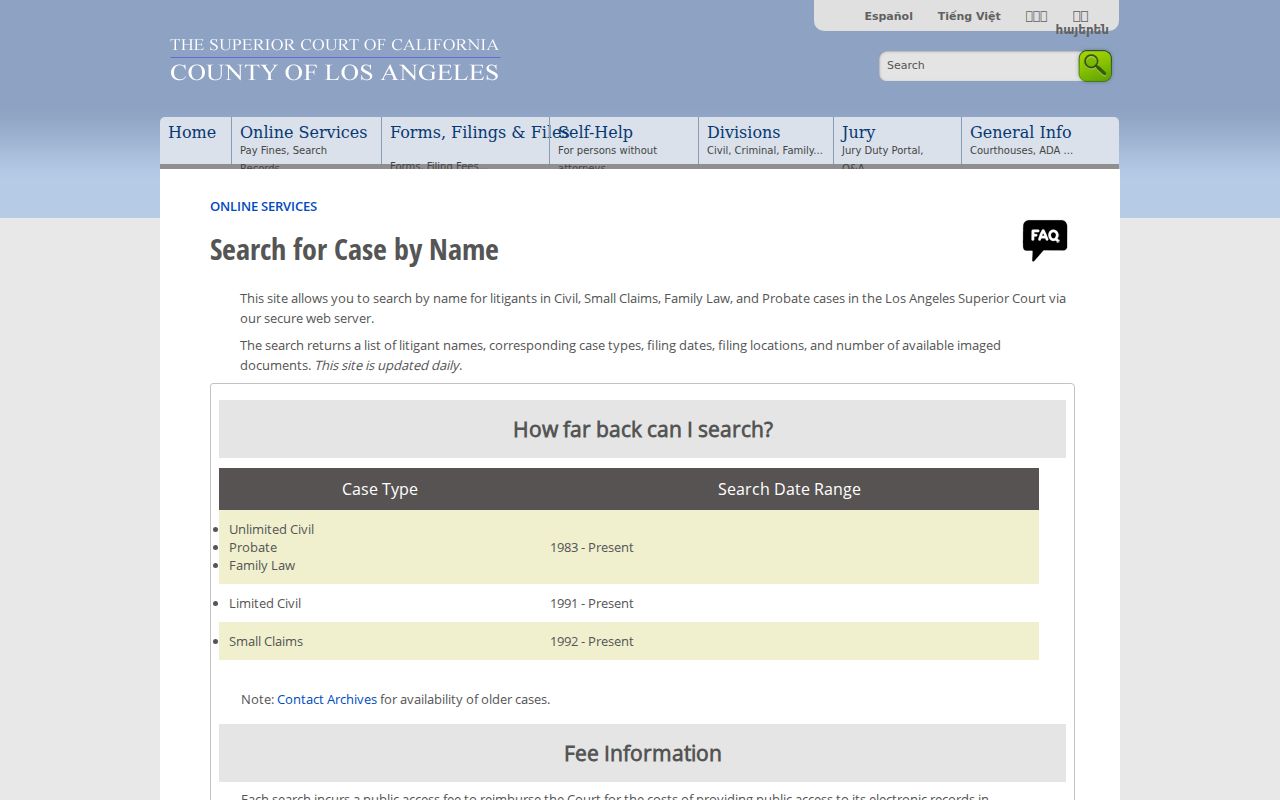
The captured screen supports a focused workflow: pick the correct case group, search the name, then use filing details to separate people with the same name. Older files require the court’s Archives and Records Center. Its staff can help locate case numbers, process mail requests, and provide copies or certifications. Criminal and traffic access uses division-specific court routes. Juvenile, sealed, adoption, and confidential material remains restricted, even when a case index exists.
Note: A docket is the court’s event list for a case; it is not the same thing as the full set of filed documents.
Order Walnut Vital Records Carefully
Birth, death, and marriage records for Walnut events are ordered through the Los Angeles County RR/CC or the California Department of Public Health. California Health and Safety Code section 103526 divides many certified copies into authorized and informational forms. An authorized copy can establish identity and is limited to eligible requesters. An informational copy is marked as not valid to establish identity. Confidential marriage records are available only to the spouses or by court order.
The county application gives same-day service only for newer ranges: county births since 1962 except 1972 through 1977, deaths since 1995, and LA County-issued marriages since 1995. Older county records follow mail or in-person procedures. Mailed coverage reaches births from 1866, deaths from 1877, and LA County marriages from 1852.
The LA County vital-record application presents the application, customer, certificate information, and submission steps.
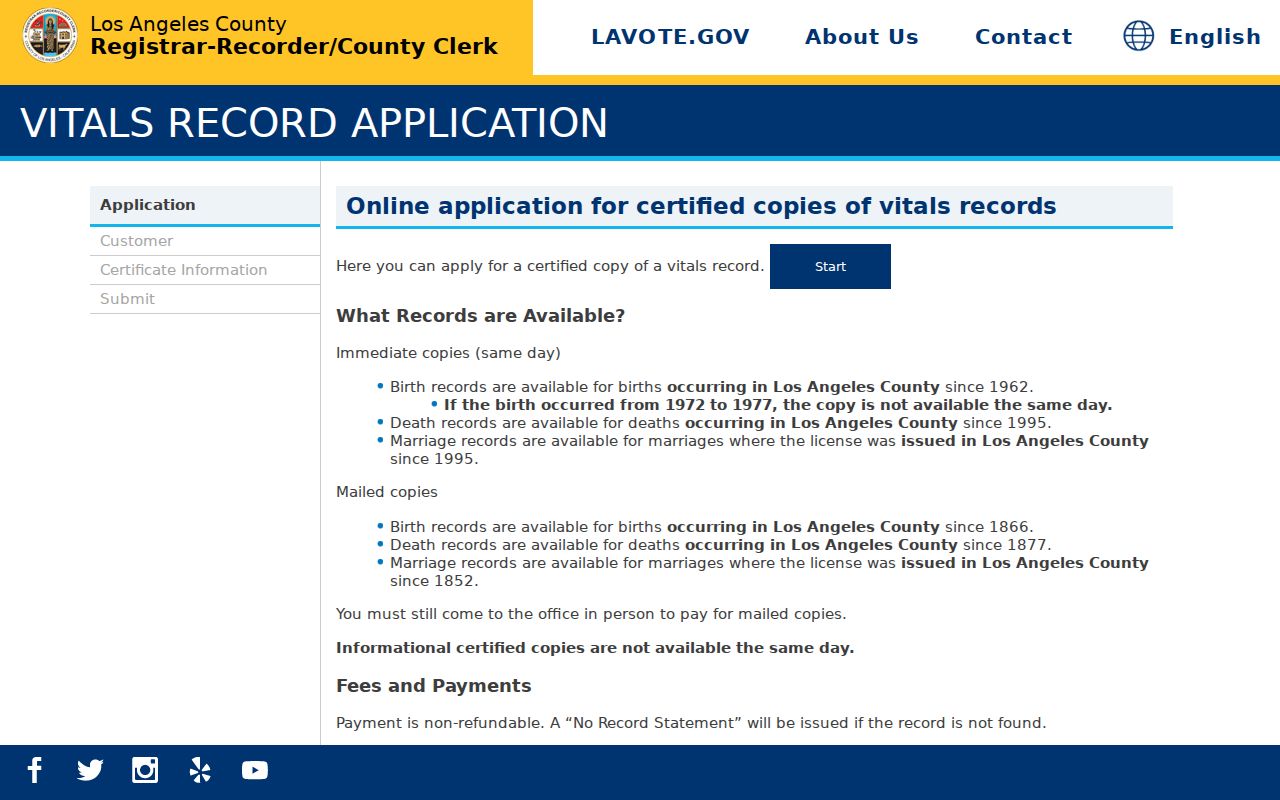
The confirmation is not the certificate. A requester must visit an RR/CC office with the confirmation number, valid photo identification, and payment.
Trace Walnut Addresses Through Parcels
Property is one of the strongest Walnut people-search trails because the city is mainly residential. Begin with the LA County Assessor Portal when an address or Assessor Identification Number, called an AIN or APN, is known. The official public interface supports address or AIN searching and offers a separate map search. Research did not verify a public owner-name search or a full parcel-card field list, so neither should be assumed. The LA County Assessor Portal is the first official address-based stop.
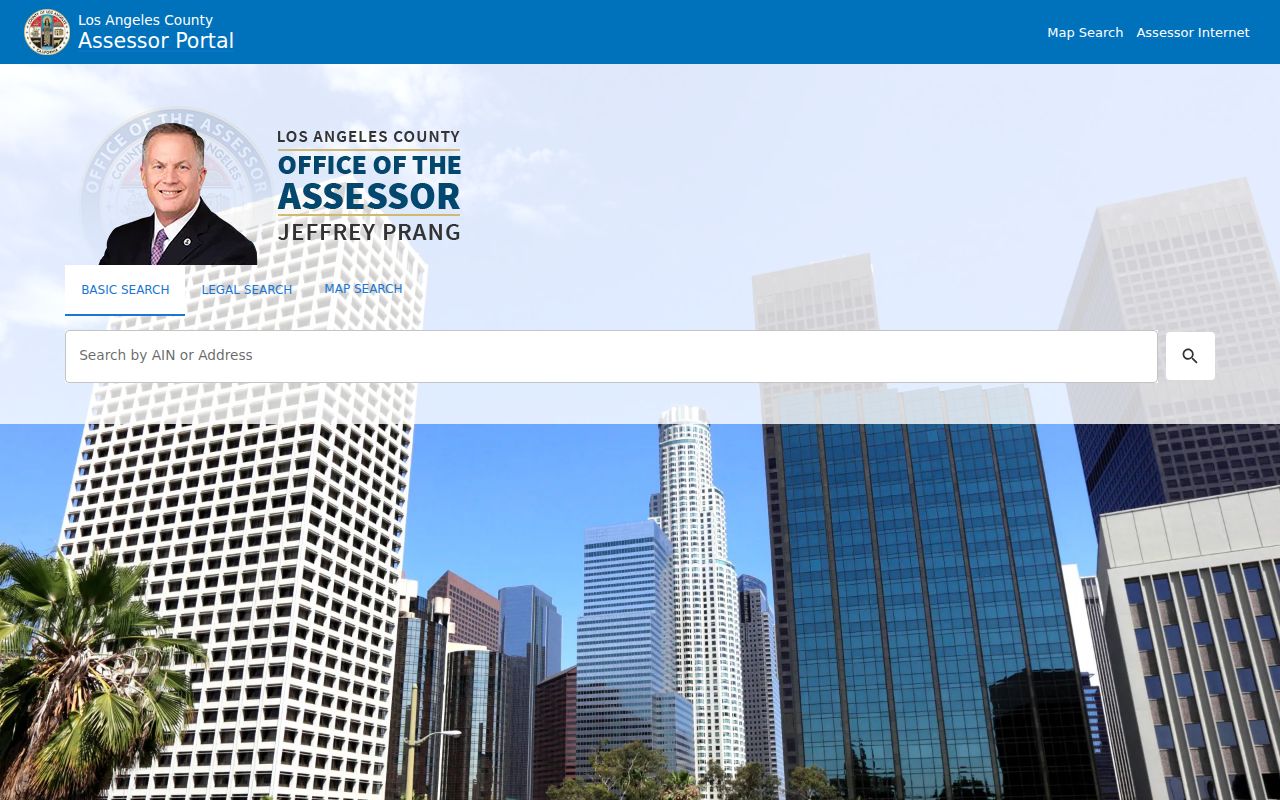
Use the portal to establish parcel identity before moving to the deed index, property-tax system, or city permit files. Next, open the LA County Assessor map search to place that parcel in its boundary context.
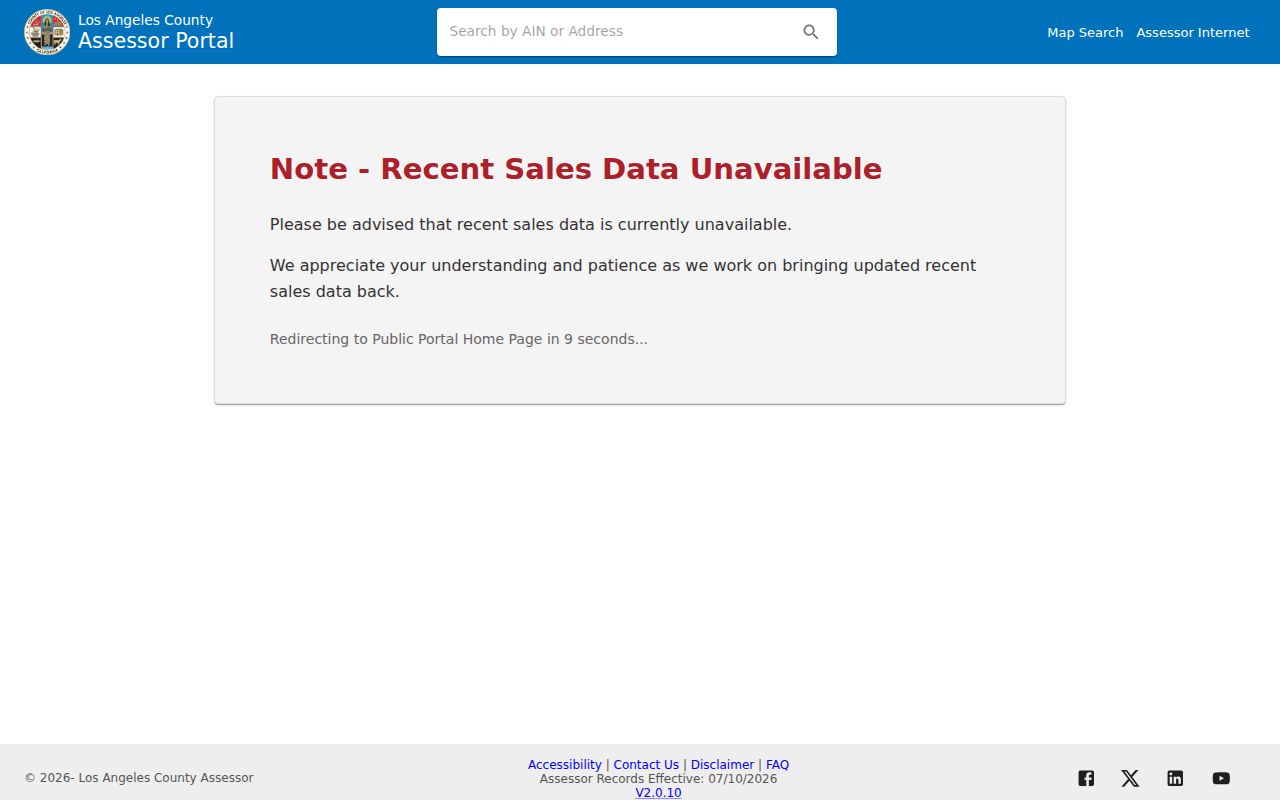
The map helps distinguish Walnut parcels from nearby Diamond Bar, West Covina, Covina Hill, and unincorporated county areas. That boundary check can determine which planning or code office holds the next record.
Address trail: Walnut street address → assessor AIN → parcel map and legal description → RR/CC grantor-grantee index → prior owners and recorded instruments.
Decode Walnut People Search Terms
County systems use short labels that can hide how records connect. Learning them prevents a parcel result from being mistaken for a deed or a court index from being mistaken for a full file.
- AIN or APN
- The assessor’s identification number that ties a parcel to tax and map records.
- Situs address
- The physical location of a property, which may differ from the owner’s tax mailing address.
- Legal description
- The lot, block, subdivision, or metes-and-bounds text used to identify land in recorded documents.
- Certified copy
- A copy formally attested by the custodian, often with added eligibility, identification, and fee rules.
- Decedent
- The deceased person whose estate may appear in probate, death, deed-transfer, and unclaimed-property records.
These terms form a chain. The assessor number leads to the parcel, the legal description supports deed work, and probate or vital records help explain a later ownership transfer.
Search Walnut Records Before 1959
Walnut incorporated in 1959, but the county’s land and vital collections begin far earlier. A person living in the area before incorporation may be absent under the modern city name. Search Rowland, La Puente, Pomona Valley, San Gabriel Valley, San Gabriel Mission, and Los Angeles County as alternate place terms. This is more than a spelling trick. It reflects the region’s real government and ranch history.
Walnut’s official history links the area to Gabrielino and Shoshone roots, Mission grazing land, and the Rowland ranch. The Lemon Creek Park area became Rowland property in 1871, and William Rowland inherited a 29,000-acre ranch from John Rowland. Old land, census, newspaper, and directory references may therefore describe the ranch or nearby community rather than Walnut.
For address work, Los Angeles Public Library digitized Los Angeles-area city and street directories from 1875 through 1987. Reverse directories are available for 1906, 1927, and 1956 through 1987. Those sources can connect an old street address to an occupant and year. LA County Library databases add census schedules, newspapers, directories, and county histories.
Note: Walnut-specific city-directory years were not verified, so regional Los Angeles coverage is the honest fallback instead of a claimed local run.
Request Walnut City Name Records
Walnut City Hall holds records that name people in civic life: council minutes, agendas, ordinances, resolutions, claims, planning applications, building files, and local election material. The city does not publish a comprehensive searchable records portal. Requests go to the City Clerk by phone, email, in person, or a linked PDF request form. Useful request details include the department, date range, address, project, and type of document sought.
Building and code files are often keyed to an address. A building inspection request asks for the project address, contact information, and inspection type. Planning applications may carry the property owner’s signature and notarization. Code Enforcement handles conditions such as weeds, junk cars, signs, and property upkeep, though privacy and active-enforcement limits may restrict parts of a file.
The RR/CC NextRequest center serves a different level of government: county RR/CC public-record requests and previously published requests.
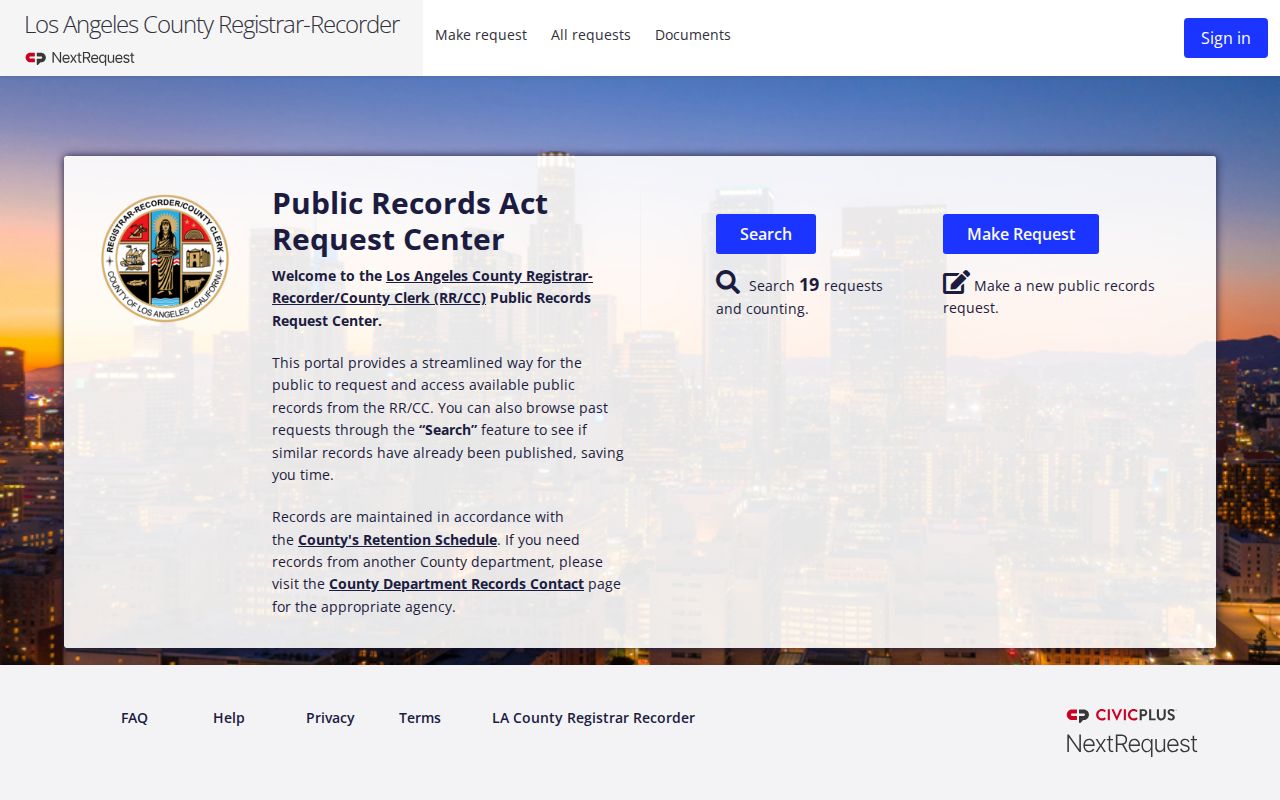
The screenshot helps separate a records request from a direct index search. NextRequest is useful for RR/CC administrative records, but it does not turn the official deed index into an internet database.
Verify Walnut Names in Licenses
State license and business portals can confirm a person’s public professional role or connect a name with a registered business. The California Department of Consumer Affairs search spans many boards and bureaus. Its records can show whether a license is current, expired, suspended, revoked, or subject to discipline. Separate official tools cover attorneys through the State Bar, contractors through CSLB, real-estate licensees through DRE, and business entities through the Secretary of State’s bizfile system.
The California DCA License Search asks users to narrow by board, license type, name, or license number. Those choices matter. Two people with the same name can often be separated by profession, license status, city, or license number.
Business records serve another path. SOS bizfile can show entity status, agents for service of process, filing dates, addresses, and filed statements, depending on entity type. Los Angeles County RR/CC also handles fictitious business name filings. No public Walnut business-license register was verified, so the county and state sources are the supported route.
Browse Walnut Local People Directories
Walnut’s public directories are strongest in government and education. City department pages list names, titles, phone extensions, and email addresses. Walnut High School provides a searchable staff list with names and roles. Mt. San Antonio College, located in Walnut, offers a live last-name faculty search plus alphabetical browsing and icons for email, web pages, and profiles. Its scale may make it the city’s largest current local people directory.
The Walnut staff directory route shows how the city organizes current contacts.
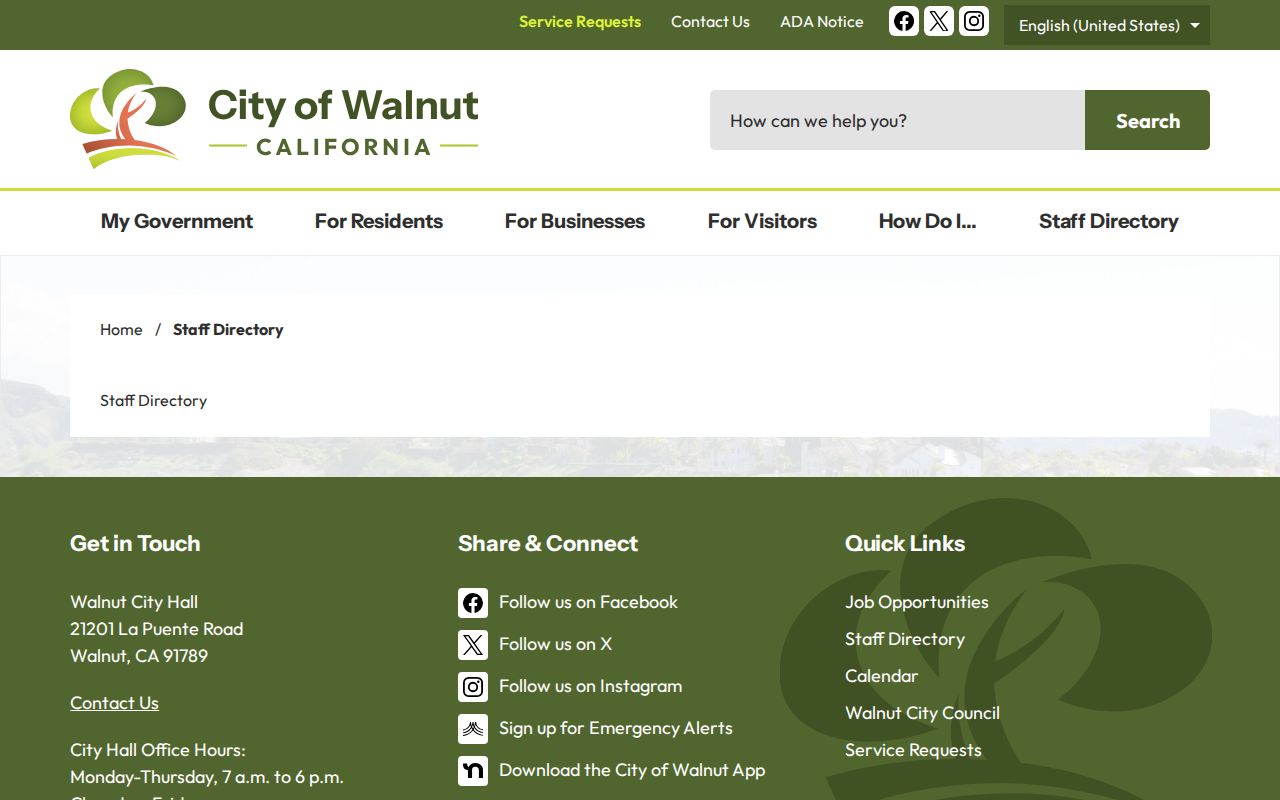
The directory is best for public roles, not personal addresses. For school, college, historical, and professional sources, the Walnut local directories organize each directory by what it lists and how it searches.
Note: Public staff entries should be read in context; a title and work contact identify an official role, not a private identity record.
Know Walnut Voter Search Limits
LA County’s voter status tool is designed for a voter to check a registration, not for browsing names like a public phone book. It requires last name, birthdate, house number, and ZIP Code. The combination protects the lookup from casual searching. A successful self-check should not be treated as permission to collect or republish protected registration details. The LA County voter verification form shows those required fields.
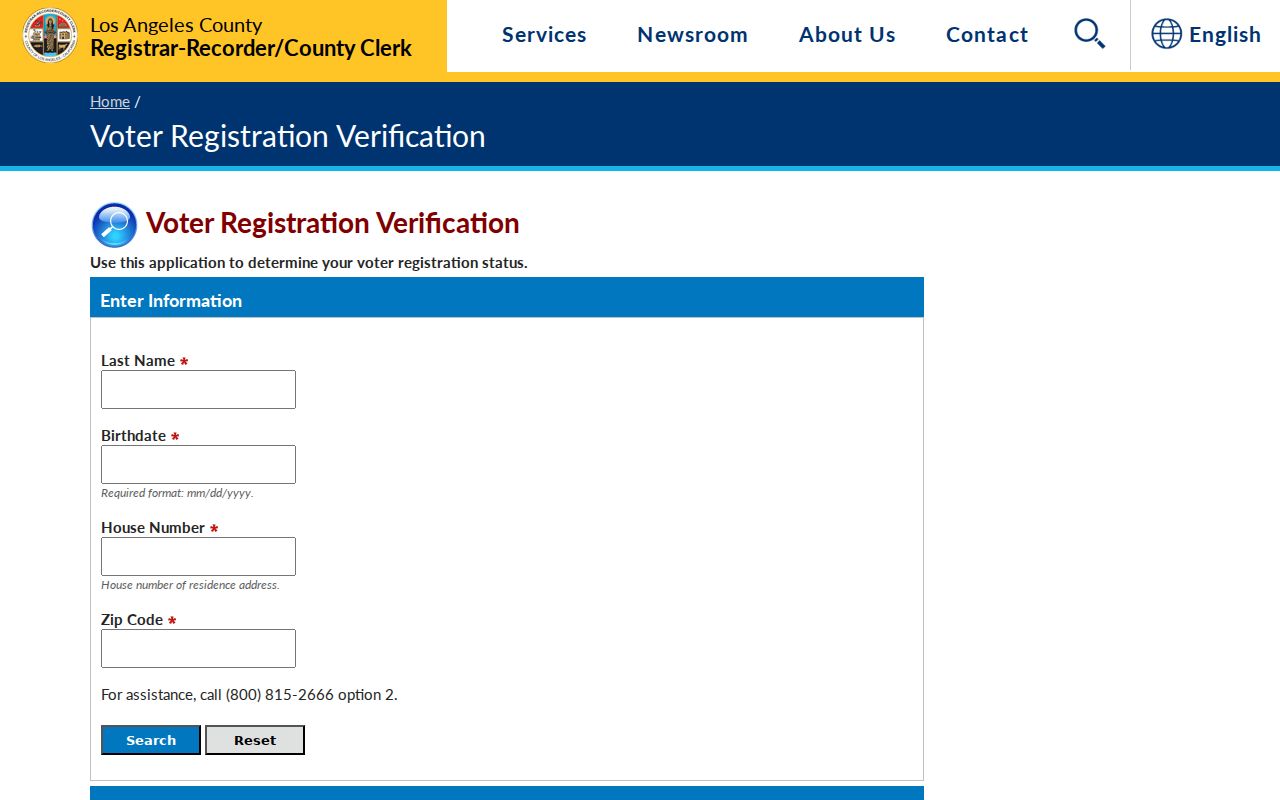
The screenshot confirms the self-verification design. It does not support an open-ended Walnut name search.
| Lookup field | Input rule | Why it matters |
|---|---|---|
| Last name | Alphabetic text | Matches the voter’s registration name |
| Birthdate | MM/DD/YYYY | Separates similar names |
| House number | Numbers only | Ties the check to the residence |
| ZIP Code | Numbers only | Narrows the registration area |
Formal voter-information requests follow different rules. The LA County voter information request page explains in-person and mail channels, identity details required from a requester, and per-name fees.
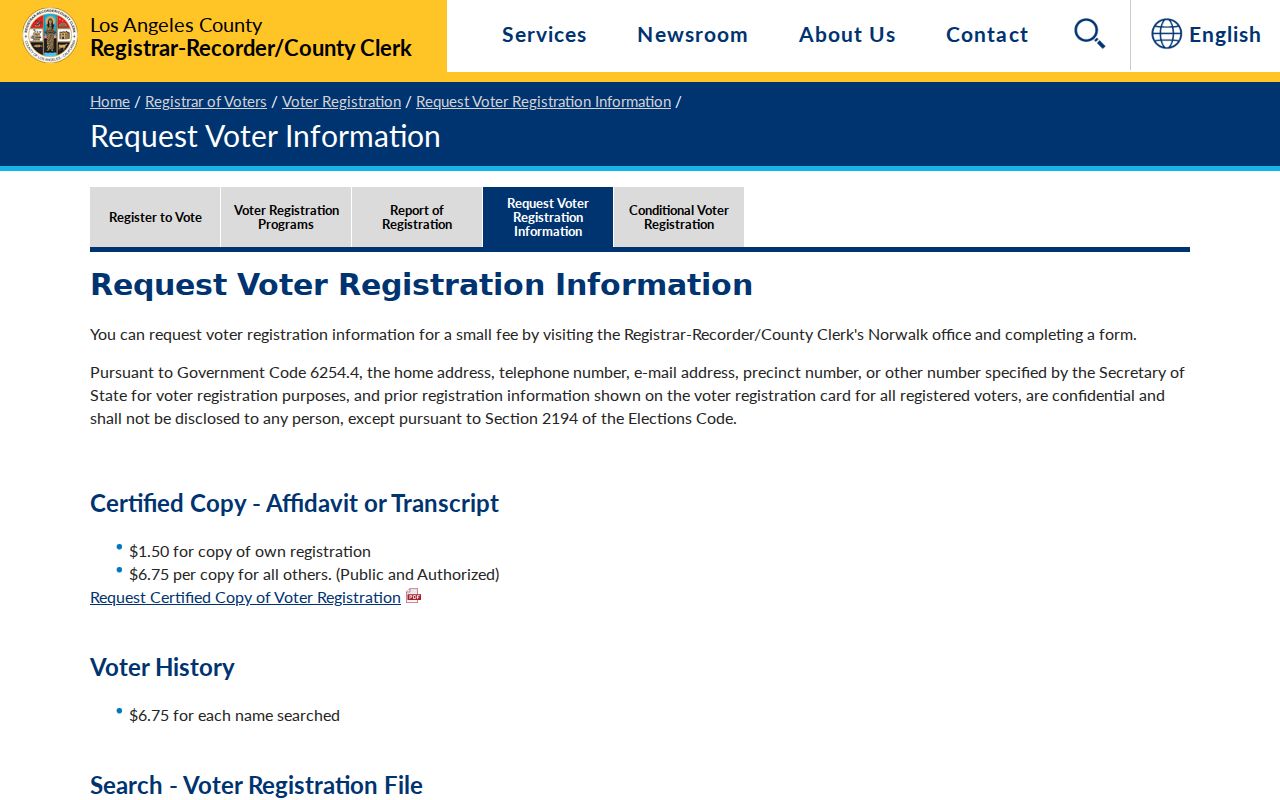
California Elections Code section 2194 limits voter-file access and use. Home address, phone, email, precinct number, prior registration information, identification numbers, and signatures can be confidential. The full voter-record process belongs on the voter registration page.
Check Walnut Custody Records Safely
Current custody searches depend on the agency. LASD’s Inmate Information Center is the county jail locator, and bookings from the most recent two hours may not appear. California state prison records use CDCR’s Incarcerated Records and Information Search. Federal custody searches use the Bureau of Prisons locator for people incarcerated from 1982 forward. The exact LASD search fields and sample result were not verified in the research, so broad claims about displayed charges, bail, or release fields should be avoided.
California’s Megan’s Law service is a separate public-safety tool. Penal Code section 290.46 authorizes disclosed information to help protect a person at risk and sets limits on misuse. Victim-identifying data, employer names and addresses, and unrelated criminal history are excluded. A name match should be verified through the official source and used only for lawful safety purposes.
For Walnut incidents or local report questions, contact the LASD Walnut/Diamond Bar Station. Active cases, victim data, juvenile records, and sensitive investigative details may be withheld under public-record and privacy rules.
Keep Walnut People Search Lawful
Official records have boundaries. Sealed and juvenile court files, adoption records, confidential marriages, protected addresses, portions of voter files, DMV data, and some law-enforcement material are not open people-search sources. California’s Safe at Home program supplies a substitute mailing address as part of a safety plan, which can affect voter and public-contact records. Those protections should never be treated as gaps to bypass.
Commercial people-finder databases are compiled products, not official custodians. Their address, phone, and relationship claims may be stale, merged, or wrong. Official records also change, but they identify the office responsible for the source. Confirm a result with the custodian and use more than one matching fact before deciding that two records describe the same person.
Lawful-use limit: Use Walnut records for legitimate personal research, family history, civic review, scam prevention, or safety. Never use them to stalk, harass, threaten, or harm anyone.
Privacy choices also differ by source. A California resident may seek deletion from covered data brokers through state privacy rights, while an accurate government record may remain public unless a statute permits sealing, redaction, or address protection. The right route is the relevant agency or privacy process, not an attempt to conceal or distort an official file.